
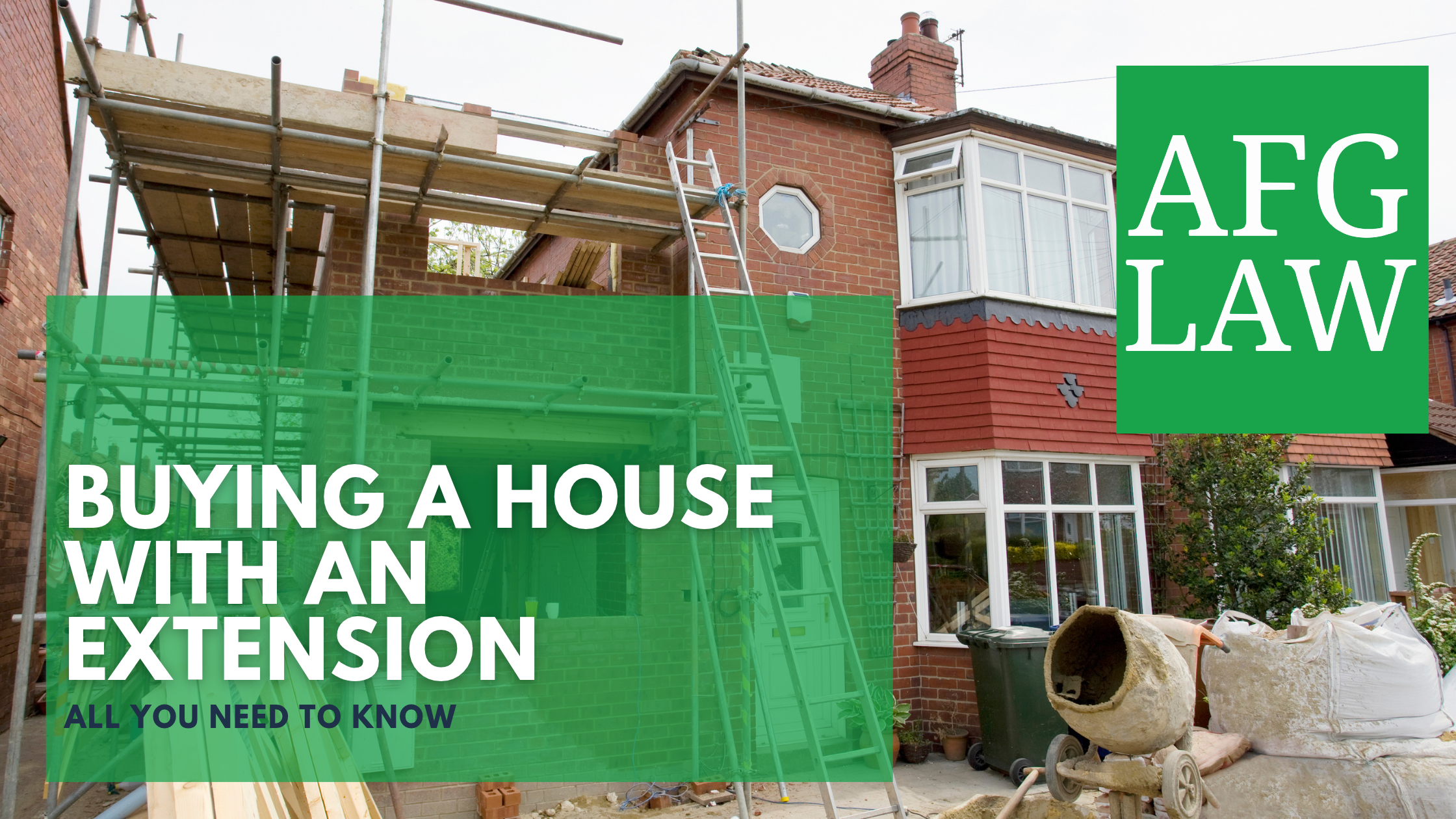
An extension can make a property more attractive to buyers, offering additional living space, a larger kitchen or an extra bedroom. However, when buying a house with an extension, it is important to check that the building work was carried out properly and that the necessary approvals were obtained.
Just because an extension has been standing for several years does not necessarily mean that all the legal requirements have been met.
Missing planning permission, building regulations approval or restrictions in the property’s title can cause complications during conveyancing. In some circumstances, these issues can affect your mortgage application or make the property more difficult to sell in the future.
At AFG Law, our Residential Property solicitors help buyers investigate the legal position before committing to a purchase.
Does the extension have planning permission?
One of the first things to establish is whether the extension required planning permission and, if so, whether it was obtained.
Not every extension needs a formal planning application. Some building work falls within permitted development rights, which allow certain improvements to be carried out without applying for planning permission. However, permitted development rights are subject to conditions and limitations. These can depend on the property’s location, the size of the extension and whether previous alterations have already been made.
For example, a single-storey rear extension may fall within permitted development rights, while a larger two-storey extension may require planning permission.
What if there is no planning permission for an extension?
If the seller cannot provide evidence of planning permission for an extension, this does not automatically mean the work was unlawful. Your solicitor may investigate whether the extension was permitted development, whether permission was required and whether any relevant planning conditions were satisfied.
It is also important to consider when the work was completed. Planning enforcement time limits can affect the local authority’s ability to take action, although exceptions apply. Buyers should not assume that an extension is acceptable simply because the council has not raised any concerns.
Was building regulations approval obtained?
Planning permission and building regulations approval are separate requirements. Planning permission generally concerns whether development is acceptable in planning terms. Building regulations address matters such as structural safety, fire precautions, insulation, ventilation and drainage.
Even where an extension did not require planning permission, building regulations approval may still have been necessary. During conveyancing, your solicitor may request:
- Building regulations approval documents.
- A completion certificate or final certificate.
- Relevant certificates issued by approved inspectors or registered building control approvers.
- Details of any subsequent alterations or remedial work.
A completion certificate provides evidence that the building control process was completed, although it is not a guarantee that every aspect of the construction is defect-free. This is why a building survey remains important, particularly where substantial alterations have been made.
What happens if the seller has no building regulations certificate?
Missing building regulations paperwork is a common issue when buying older properties that have been extended. Sometimes the documents have simply been lost. In other cases, the work may never have been inspected or formally approved.
Your solicitor will consider the circumstances, including the age of the extension and whether there is evidence that the appropriate procedures were followed.
Depending on the situation, possible options may include obtaining copies of existing records, seeking further information or considering indemnity insurance. However, indemnity insurance does not confirm that an extension is structurally safe. It generally provides financial protection against specified legal risks, subject to the policy terms.
It may also be unsuitable where the local authority has already been contacted about the missing approval. A surveyor can assess the physical condition of the extension and advise whether further investigation is necessary.
Are there restrictive covenants affecting the property?
Even where an extension has planning permission and building regulations approval, it may still breach restrictions contained in the property’s title. A restrictive covenant is a legal obligation that limits how land can be used or developed.
For example, a covenant may prevent the owner from constructing additional buildings or making external alterations without obtaining consent. These restrictions are separate from planning law. This means that obtaining planning permission does not necessarily remove the need to comply with a restrictive covenant.
Your solicitor will review the title documents to identify relevant restrictions and investigate whether any required consent was obtained. If an extension was built in breach of a covenant, further advice may be needed about the potential consequences and available options.
Has the extension affected the property’s boundaries?
Extensions built close to neighbouring properties can raise additional legal questions. For example, a side extension may have been constructed near a boundary, or part of the building may extend over land that does not belong to the seller. Your solicitor will examine the registered title and relevant documents to identify the legal extent of the property.
However, Land Registry title plans generally show boundaries rather than establishing their exact position on the ground.
If there are concerns about the location of the extension, a surveyor may need to investigate. It is also worth checking whether the extension affects shared access arrangements, drains or other rights benefiting neighbouring properties.
Was the Party Wall etc. Act 1996 followed?
Extensions involving work near a neighbouring property may fall within the Party Wall etc. Act 1996. The Act can apply to certain work involving shared walls, boundary structures and excavations near neighbouring buildings.
Depending on the circumstances, the homeowner may have been required to serve notices on affected neighbours and follow the relevant procedures. When buying a property, your solicitor may ask whether any party wall notices or awards were issued.
Missing documentation does not necessarily mean there is an ongoing problem, but it is worth investigating whether disputes arose during construction. A surveyor can advise on technical party wall matters where necessary.
What about loft conversions and garage conversions?
Extensions are not the only alterations that buyers should investigate. Loft conversions, garage conversions and the removal of internal walls can also require planning permission, building regulations approval or other consents.
For example, a loft may be advertised as an additional bedroom, but the conversion might not have received the necessary building regulations approval. This can raise questions about structural safety, fire protection and whether the space should be treated as habitable accommodation.
Similarly, removing a load-bearing wall to create an open-plan kitchen may require structural calculations and building control approval.
When buying a house that has undergone substantial alterations, it is important to establish exactly what work was carried out and what documentation is available.
Could an extension affect your mortgage?
Mortgage lenders need to be satisfied that the property provides suitable security for the loan. If an extension lacks important approvals, your solicitor may need to report the issue to the lender in accordance with its requirements. The lender may request further information, accept an appropriate indemnity policy or impose additional conditions.
In some cases, unresolved issues could delay the mortgage or affect the lender’s willingness to proceed. It is therefore sensible to identify potential problems early rather than discovering them shortly before exchange of contracts.
Why is a property survey important?
A conveyancing solicitor investigates the legal position of the property, but does not assess whether an extension has been constructed to an appropriate standard. A property survey can help identify physical problems such as cracking, movement, damp, inadequate support or defects in the roof.
Where an extension is particularly old, unusually designed or showing signs of structural problems, a more detailed survey or specialist structural assessment may be appropriate.
Buyers should not rely solely on the existence of planning permission or building regulations paperwork when assessing the condition of a property.
Legal investigations and physical inspections serve different purposes, and both can be important when purchasing an extended house.
Should you buy a house with an extension that has missing paperwork?
Missing documentation does not automatically mean that you should withdraw from the purchase. Many properties have extensions or alterations where records are incomplete, particularly if the work was carried out many years ago. However, you should understand the risks before proceeding.
Your solicitor can explain the legal issues, investigate available documentation and advise on potential solutions. You may also need advice from a surveyor about the condition of the work.
Depending on the findings, you might decide to proceed, request further investigations or renegotiate the purchase price. The important point is to make an informed decision before exchanging contracts, when the purchase generally becomes legally binding.
Residential conveyancing advice from AFG Law
Buying a house with an extension can provide valuable additional space, but it is important to check that the legal requirements have been addressed.
At AFG Law, our Residential Property team assists buyers with conveyancing investigations, including reviewing planning documents, building regulations approvals, restrictive covenants and other matters affecting the property.
We can raise enquiries with the seller’s solicitors, explain the implications of missing documents and help you understand your options before proceeding.
Whether you are purchasing your first home or moving to a larger property, our solicitors can guide you through the legal process.
To discuss buying a house with an extension, contact AFG Law on 01204 377600 or complete our online enquiry form.
We have offices in Bolton and Bury and assist residential property buyers throughout England and Wales.