
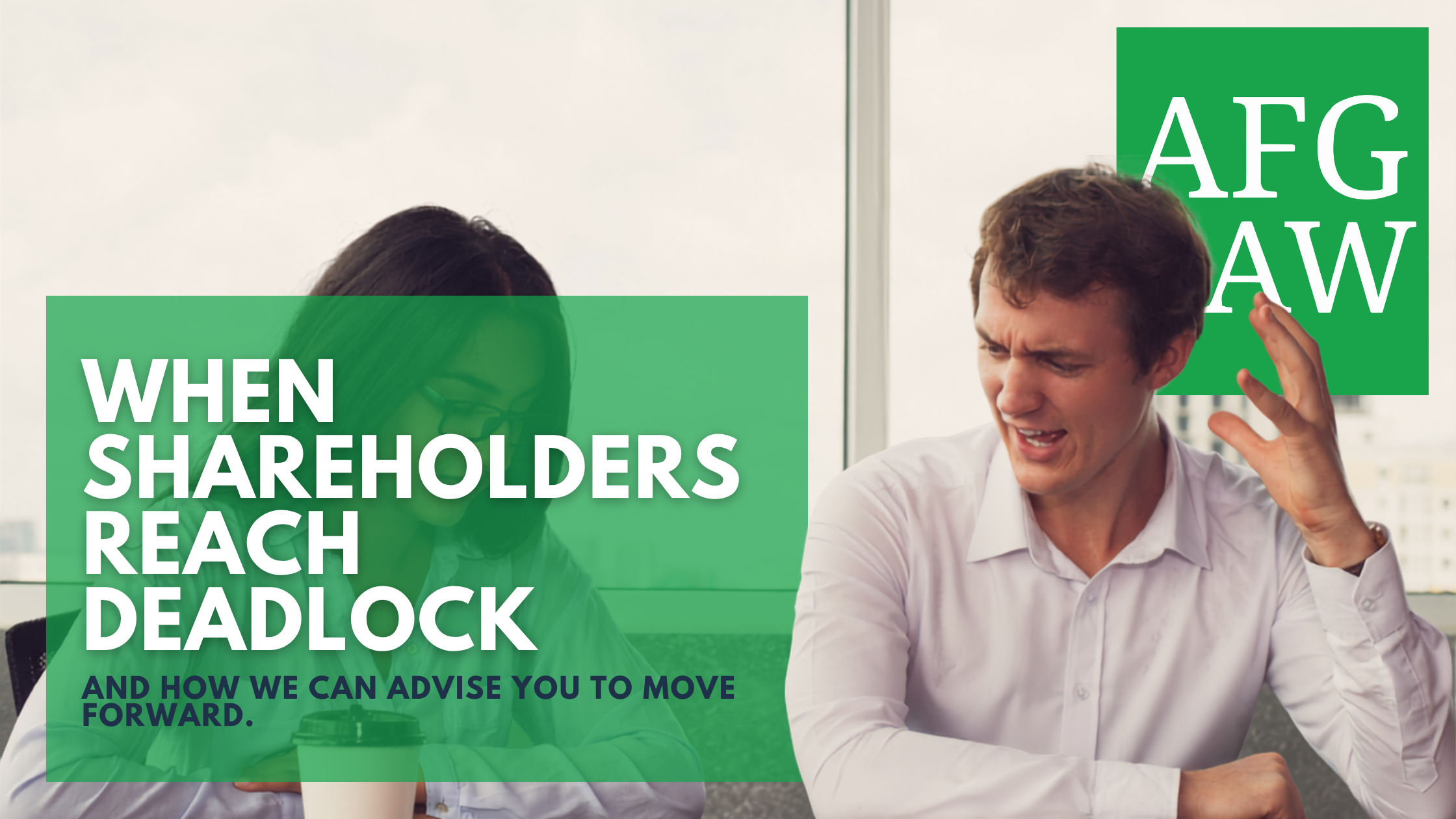
A shareholder deadlock can bring even the most successful business to a standstill. When two or more shareholders are unable to agree on important business decisions, the company may find itself unable to move forward. Contracts are delayed, investment opportunities are missed, and relationships between those involved often deteriorate.
Shareholder deadlock is particularly common in companies owned by two equal shareholders or businesses established as joint ventures, where both parties have equal control but fundamentally different views about the future of the company.
The good news is that a deadlock does not always mean the end of the business. There are a number of shareholder deadlock solutions available, and seeking legal advice at an early stage can often prevent a disagreement from developing into costly litigation.
At AFG Law, our Dispute Resolution team regularly advises company owners on resolving shareholder deadlocks, helping businesses find practical, commercial solutions wherever possible.
What is a Shareholder Deadlock?
A shareholder deadlock occurs when shareholders are unable to agree on a decision that is essential to the running of the company. In many cases, deadlock occurs because shareholders have equal voting rights. If each shareholder owns 50% of the company, neither can outvote the other, meaning decisions simply cannot be made.
Common examples include disagreements about:
- Selling the business.
- Taking on new investment.
- Appointing directors.
- Business strategy.
- Dividend payments.
- Major expenditure.
- Expansion plans.
- The future direction of the company.
While disagreements are a normal part of running a business, problems arise when there is no mechanism to move matters forward.
Why Does Shareholder Deadlock Happen?
Deadlock is often the result of changing circumstances rather than poor business planning. Many companies begin with two founders who trust each other implicitly. They may never expect their relationship to break down or assume they will always share the same vision.
Over time, however, circumstances change. One shareholder may wish to retire while the other wants to expand. One may favour reinvesting profits while the other wants larger dividends. Personal relationships can also deteriorate, making agreement increasingly difficult.
Without appropriate safeguards, these disagreements can prevent the company from functioning effectively.
The Importance of Shareholder Agreements
The best way to deal with deadlock is to plan for it before it happens. Well-drafted shareholder agreements often include specific deadlock resolution provisions explaining how disputes should be handled.
These may include:
- Negotiation requirements.
- Mediation.
- Referral to an independent expert.
- Buy-out provisions.
- Appointment of an independent director.
- Escalation procedures.
- Agreed valuation mechanisms.
Having these procedures in place provides certainty and can significantly reduce the likelihood of expensive disputes.
Can Negotiation Resolve the Dispute?
In many cases, negotiation can help to resolve a dispute between shareholders. Although emotions can run high, early negotiation mediation is often the quickest and most cost-effective way to resolve the dispute.
An experienced solicitor can help identify the underlying commercial issues, facilitate discussions and negotiate practical solutions before positions become entrenched. Preserving the business relationship is often in everyone’s interests, particularly where the company remains profitable.
Is Mediation Appropriate?
Mediation is becoming increasingly popular in shareholder disputes. A trained mediator helps the parties explore possible solutions without imposing a decision. Unlike court proceedings, mediation is confidential, flexible and usually much quicker.
Many shareholder disputes are successfully resolved through mediation, allowing the business to continue trading without lengthy litigation.
Can an Independent Director Help?
One practical solution is to appoint an independent director. An experienced independent director can provide objective commercial input and help move important decisions forward.
Where the company’s Articles of Association permit it, independent directors may also help break the deadlock by introducing an independent voice into board discussions.
This approach is particularly useful where disagreements concern day-to-day management rather than fundamental issues of ownership.
Is There a Casting Vote?
Some companies give the chair of the board a casting vote if directors cannot agree. Where validly incorporated into the company’s constitutional documents, this can provide a simple mechanism to resolve routine management issues.
However, a casting vote is not appropriate for every business and will not necessarily solve disputes between shareholders themselves, particularly where shareholder approval is required.
Can One Shareholder Buy the Other Out?
Sometimes the most practical solution is for one shareholder to buy the other’s shares. A negotiated exit can allow both parties to move forward while avoiding prolonged conflict.
The parties will usually need to agree:
- A valuation method.
- Payment terms.
- Completion arrangements.
- Any ongoing restrictions.
- Future involvement in the business.
Where agreement cannot be reached, solicitors can often assist in negotiating a fair commercial settlement.
What If There is No Agreement?
Unfortunately, some disputes cannot be resolved through negotiation alone. Depending on the circumstances, legal action may become necessary. Possible remedies include:
- Court declarations.
- Unfair prejudice petitions.
- Derivative claims.
- Enforcement of shareholder agreements.
- Applications relating to directors’ duties.
Every dispute is different, so obtaining specialist legal advice is essential before commencing court proceedings.
Can the Court Wind Up the Company?
In some cases, one shareholder may ask the court for the winding up of the company. This is sometimes referred to as a “just and equitable” winding-up petition.
The court will only grant such an order in limited circumstances, usually where relationships have broken down so completely that the company can no longer function.
Because winding up effectively brings the business to an end, the courts generally regard it as a remedy of last resort.
Where possible, alternative shareholder deadlock solutions are usually explored first.
What Does the Companies Act 2006 Say?
The Companies Act 2006 provides the legal basis governing companies in England and Wales. Depending on the facts of the dispute, shareholders may have statutory rights that assist in resolving disagreements, particularly where there are allegations of unfair conduct or breaches of directors’ duties.
The company’s Articles of Association, any shareholders’ agreement and the specific circumstances of the dispute will all be relevant when assessing the available options.
How Can Deadlock Be Prevented?
While not every disagreement can be avoided, careful planning can significantly reduce the risk of future disputes. Businesses should consider:
- Comprehensive shareholder agreements.
- Clearly defined decision-making powers.
- Buy-out mechanisms.
- Procedures to resolve deadlocks.
- Regular shareholder meetings.
- Independent advice where disagreements first emerge.
Addressing issues early is almost always easier than attempting to resolve an entrenched dispute later.
How AFG Law Can Help
At AFG Law, our experienced Dispute Resolution team advises shareholders, directors and companies on all aspects of shareholder disputes. Whether you need assistance with resolving shareholder deadlocks, negotiating a shareholder exit or pursuing formal legal remedies, we provide practical advice focused on protecting both your legal position and the future of your business.
Our team can assist with:
- Reviewing and enforcing shareholder agreements.
- Advising on deadlock resolution mechanisms.
- Negotiation and mediation.
- Share purchase negotiations.
- Director and shareholder disputes.
- Court proceedings where necessary.
- Applications under the Companies Act 2006.
A shareholder deadlock does not have to mean the end of a successful business. With early legal advice and the right strategy, many disputes can be resolved without bringing the company to a standstill. If your business has reached deadlock, our team is here to help you explore the most appropriate solution for your circumstances.